
AI Integration Services
AI Integration Services
AI integration services from PS3G: add LLMs, vision, speech and prediction to the applications you already run, through APIs and connectors, with security.
PS3G provides AI integration services for organizations of every size that want AI inside the software they already run rather than a separate tool nobody opens. We integrate large language models, vision, speech and predictive models into your web applications, mobile apps, portals, CRM, ERP, helpdesk and custom systems, through vendor APIs and connectors, with security, logging and cost control designed in. A founder might add an AI feature to a product. A growing company might put a drafting assistant inside its CRM. A department in a larger organization might add document extraction to a case-management system that must keep its audit trail and single sign-on. The integration is scoped to your system; the engineering discipline is the same.
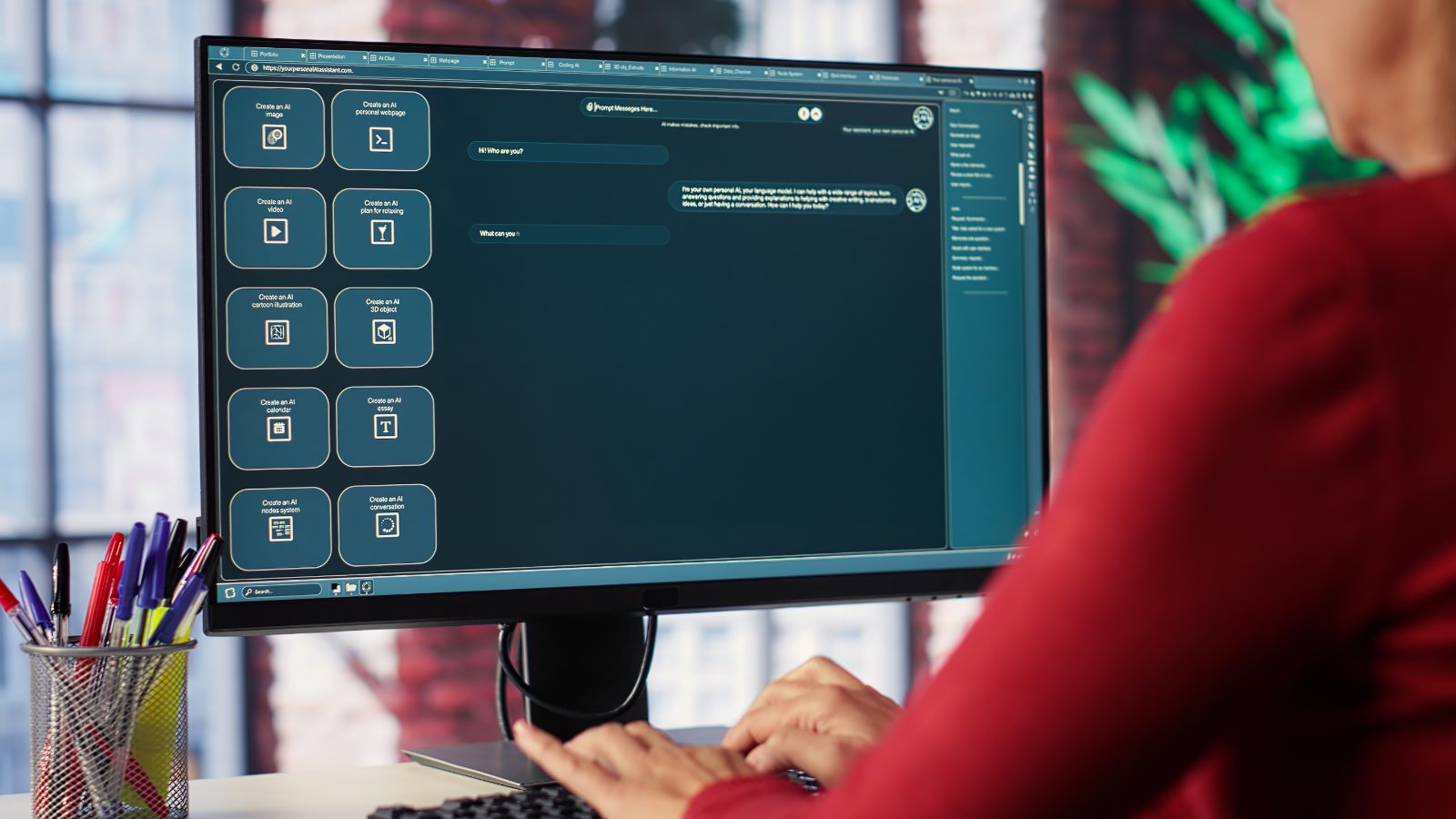
AI Integration Services: what we build and for whom
Most organizations do not need a new AI application. They need the application they have to do one or two things it could not do before: summarize the record on screen, draft the reply, read the attachment, flag the anomaly, answer the question from the manual, transcribe the call. AI API integration makes that possible without a rebuild, because the capability comes from a model behind an API and the work is in connecting it well: the right context from your data, the user’s identity and permissions, a sensible fallback when the model is slow or wrong, and a record of what happened.
As an AI integration company we spend most of our effort on that connective work, and we build on whatever your application is written in: .NET, Java, Node.js, Python, PHP, native mobile or a low-code platform.
What the service covers
| Typical work | What we integrate | What the integration includes |
|---|---|---|
| LLM features in your application | Summaries, drafting, rewriting, question answering over the record on screen, structured extraction, classification | Prompt and context assembly from your data, output validation, user feedback capture, cost per call tracking |
| Knowledge assistants in existing tools | Answers from your documents inside the helpdesk, intranet, portal or CRM | Retrieval layer with permission mapping, citations, index refresh, refusal when sources do not cover the question |
| Vision | Reading documents, forms, labels and photos; classifying images; detecting defects | Model selection (cloud API or hosted), preprocessing, confidence thresholds, human review queue |
| Speech | Transcription of calls and dictation, voice input in mobile apps, text to speech | Streaming or batch pipelines, speaker handling, redaction of sensitive content, storage rules |
| Prediction | Scores and forecasts from models (yours or ours) shown where decisions are made | Serving endpoint, batch scoring into your database, explanation text, monitoring |
| Platform connectors | AI inside Microsoft 365, Dynamics, Salesforce, ServiceNow or similar through their extension points | Connector or plugin development, identity pass-through, tenant configuration |
We integrate software with software. We do not supply hardware, help desk services or device management.
How we work
- Feature definition. One capability, the screen or workflow it lives in, the data it needs, and how a user will know it worked. We write this down with examples before choosing a model.
- Architecture. Where the integration layer sits (inside the application, as a separate service, or as a gateway), which provider and model to use, how context is assembled, what the fallback is, and how cost is capped. The layer is designed so the model can be swapped by configuration.
- Build. The integration code in your stack, with typed contracts for every call, validation of every output before it touches your data, and logging of inputs, outputs, latency and cost tied to the user. Where your application lacks an API for the data the model needs, our API development and integration team adds one.
- Evaluate. A test set of real inputs with expected outputs, run on every change. For LLM integration services this is the difference between a feature that impresses in a demo and one that behaves on Monday morning.
- Release and monitor. Feature flags for a staged rollout, dashboards for usage, quality signals and spend, and alerts when a provider degrades.
The team is typically an integration engineer who knows your stack, an AI engineer for model and prompt work, and a tester from our testing center of excellence. For stack choices we are vendor-neutral: OpenAI integration services through the OpenAI API or Azure OpenAI for Microsoft-centric estates, Google models on Vertex AI, Anthropic models, or open-weight models hosted in your environment where data residency requires it. The decision is recorded with reasons so it can be revisited.
Describe the feature and the system it belongs in; we will scope the integration with a fixed-scope quote.
Where this fits with the rest of your systems
An AI integration layer should be a thin, well-defined part of your architecture, not a tangle of API keys in application code. We build it to respect the boundaries you already have: authentication through your identity provider so every call is attributable to a user; permissions enforced before data reaches a model; secrets in a vault rather than in configuration files; network rules and private endpoints where your cloud requires them; and logs that flow into the monitoring you already run.
Governance travels with it. Each integrated capability gets an entry in your AI inventory, a short risk note and a human-review point where the output affects customers, money or compliance, in line with our AI governance practice. Larger builds, such as full RAG systems, agents or data pipelines, are covered by our AI development service; integration is where an existing application gets one capability at a time.
Examples by organization size
- A founder-led software company wants to integrate AI into existing software without distracting its two engineers. We add a summarization and drafting feature to the product’s main screen through a small integration service, with usage metering so the cost can be passed to the right plan tier, and hand over tests and documentation.
- A growing services company runs a CRM and a helpdesk with years of history. We integrate a knowledge assistant into the helpdesk that answers from past tickets and the policy library, with retrieval limited by the agent’s permissions, and a draft-reply button that the agent edits before sending.
- A department inside a larger organization has a case-management system on .NET with single sign-on and strict audit requirements. We add document extraction and classification through Azure OpenAI inside the organization’s tenancy, keep every call attributable to a user, route low-confidence extractions to a review queue, and release behind a feature flag through the existing change process.
Engagement models
- Fixed-scope project. One capability integrated into one system, with evaluation, monitoring and documentation, at a fixed-scope quote.
- Dedicated team or staff augmentation. Integration and AI engineers working inside your product team on a monthly basis as the list of AI features grows.
- Managed services. We operate the integrations under defined SLAs: provider changes, model upgrades tested against the evaluation set, cost reporting and incident response.
- Advisory. An architecture review of an integration your team is building, or a vendor and model evaluation for a specific feature.
How we start: a first conversation, a short assessment, and a written proposal.
Why PS3G for AI integration
- We have integrated AI features into our own HIPAA-compliant EHR and telehealth platform, DocVilla, inside a production system with audit, permissions and uptime obligations, which is the same situation most clients are in.
- Over a decade of software development and IT services across .NET, Java, Node.js, PHP, Python and mobile stacks, with a US headquarters in Wilmington, Delaware and a delivery center in India.
- Microsoft-certified and open-source-certified engineers, so Azure OpenAI and open-weight deployments are both available.
- A testing center of excellence that builds the evaluation sets and regression tests each integration is checked against.
Related services
- AI development: full RAG systems, agents, pipelines and evaluation.
- API development and integration: the APIs AI features depend on.
- AI governance: inventory, risk notes and review points for every integrated capability.
- Generative AI development: new LLM applications rather than features in existing ones.
- All PS3G services: consulting, development, testing, cloud, data and AI.
Frequently asked questions
Can you integrate AI into existing software without rewriting it?
In most cases, yes. The AI capability lives behind an API, so the work is adding an integration layer and the user-facing feature inside your current application, in whatever stack it uses. A rewrite is only needed when the application has no way to expose the data the model needs, and even then the usual answer is to add an API, not to start over.
Which AI provider should we integrate with?
The one that fits your data-handling rules, your cloud and your cost expectations, tested on your own examples. Microsoft-centric organizations often choose Azure OpenAI inside their tenancy; others use the OpenAI API, Google or Anthropic models, or open-weight models hosted privately. We build the layer so the provider can be changed by configuration, because the best option shifts over time.
How do you keep our data secure during AI API integration?
Calls go through business accounts whose terms exclude training on your data, or through models deployed in your own tenancy. Sensitive fields are masked before they are sent where they are not needed, permissions are enforced before retrieval, secrets are kept in a vault, calls are attributed to the user through your identity provider, and logs follow your retention policy. These controls are the ones we apply to our own regulated software.
What does LLM integration cost to run?
Run cost depends on how many calls your users make, how much context each call carries and which model tier you use. We measure cost per call from the first day of testing, cap spend per user or tenant where appropriate, route simple requests to smaller models, and report usage so you can see the number before and after launch. We quote the build as a fixed scope and show the projected run cost alongside it.
What happens when the AI provider is down or gives a bad answer?
The integration is designed for both. A timeout or outage falls back to a defined behavior, such as a queued retry, a secondary provider or simply hiding the feature, so your application keeps working. Outputs are validated against a schema or rules before they touch your data, low-confidence results go to a person, and users can flag a bad answer, which feeds the evaluation set.
Can you build AI into Microsoft 365, Dynamics or Salesforce?
Yes, through each platform’s extension points: Copilot Studio agents and connectors for Microsoft 365, plugins and custom APIs for Dynamics, and Apex or platform features for Salesforce. We work inside the platform’s identity and governance model rather than around it. Our Microsoft Copilot consulting and Salesforce development teams handle the platform-specific parts alongside the integration work.
Talk to us about your project
Tell us what you are trying to do. We will reply with questions, not a sales pitch, and set up a short video meeting if it helps.


