
AR/VR Development Services
AR/VR Development Services
AR/VR development services from PS3G: augmented and virtual reality apps for training, product visualization, field service and education on Unity.
PS3G provides AR/VR development services for organizations of every size: augmented reality apps that overlay instructions, data or 3D models on the real world through a phone, tablet or headset; virtual reality applications for training, simulation and product walkthroughs; and mixed reality experiences that combine the two. Whether you are a founder with an idea for an AR product, a training manager who needs people to practice a dangerous or expensive procedure safely, or a product team that wants customers to see a configuration before it is built, we design and build the software on Unity and the native AR frameworks and connect it to the systems you already run.
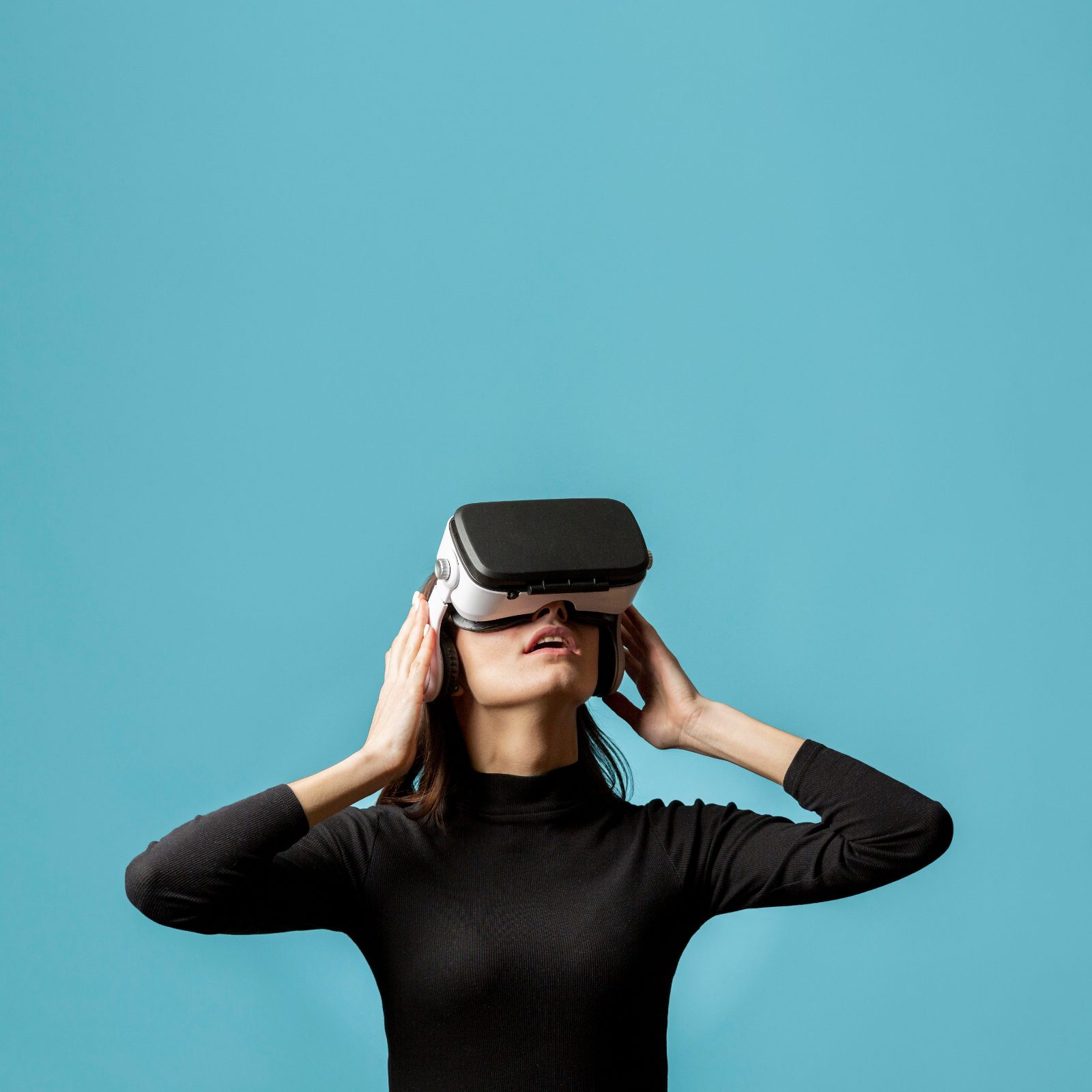
AR/VR development services: what we build and for whom
AR and VR are useful when seeing something in place, at scale or in motion changes a decision or a skill. The projects that succeed start from a job to be done: cut training time for a procedure, reduce errors in assembly or maintenance, let a buyer see a product in their own space, or teach a concept that is hard to grasp from a diagram. We have shipped AR/VR builds for education, healthcare and entertainment, and we bring the same discipline to every new domain.
As an AR VR development company that is also a general software firm, we treat the headset or phone app as one part of a system. The content pipeline, the user accounts, the analytics that show who completed which module, the back end that serves 3D assets, and the integration with your LMS, CRM or product catalog are built by the same team. We build software only: we do not sell, configure or support headsets or other hardware, and we build for the devices you choose.
What the service covers
| Area | Typical work | What you receive |
|---|---|---|
| AR app development | Mobile AR on iOS (ARKit) and Android (ARCore): object placement, image and marker tracking, measurement, overlays; web AR where no install is acceptable | A store-ready or enterprise-distributed app with a content management back end |
| VR app development | Training simulations, procedural practice, safety scenarios, virtual walkthroughs and showrooms on Meta Quest, PC VR and other OpenXR headsets | A VR application with scenario authoring, scoring and progress tracking |
| Mixed reality development | Hands-free guidance, remote assistance and spatial data on HoloLens-class and passthrough headsets | A mixed reality app integrated with your field-service or maintenance systems |
| Product visualization | Configurators, true-scale placement in a room or on site, exploded views, animated assembly | A visualization app tied to your product catalog and pricing |
| Training and education | Curriculum mapped to scenarios, instructor dashboards, assessment, LMS integration (SCORM or xAPI) | A training program with measurable completion and performance data |
| 3D content pipeline | Conversion and optimization of CAD, BIM and scanned models; asset management and streaming | Optimized assets and a repeatable pipeline from source files to the app |
| Back end and integration | User management, content delivery, analytics, APIs to LMS, CRM, ERP, IoT and EHR systems | A cloud back end on Azure, AWS or Google Cloud with documentation |
| Testing and deployment | Device testing, performance and comfort testing, enterprise distribution, store submission | Tested builds and a distribution and update process |
How we work
Process
- Define the job and the measure. We write down what the experience must change (time to competence, error rate, conversion, comprehension) and how you will know. Projects without a measure become demos.
- Choose the device class and reach. Phone AR reaches everyone and tracks less precisely; headset VR immerses fully and needs managed devices; mixed reality headsets suit hands-busy work. We recommend the class, you choose the hardware.
- Prototype one scenario. A playable slice of the core interaction in weeks, tested with real users, before committing to the full build. Comfort, tracking stability and clarity of instruction are judged here.
- Build the full experience and the back end. Scenarios, content pipeline, accounts, analytics and integrations, delivered in increments with device testing by our testing center of excellence.
- Deploy and measure. Enterprise distribution or store release, instructor or admin training, and a review of the measures you set at the start.
Team
A producer who owns the scenarios and the measure, Unity developers, a 3D artist or technical artist for assets and optimization, a back-end engineer, a UX designer who understands spatial interaction, and QA with the target devices on hand. The team sits in Wilmington, Delaware and in our India delivery center.
Stack choices
Unity is our default engine for AR and VR because it targets every relevant device from one codebase, with AR Foundation covering ARKit and ARCore and OpenXR covering headsets. We use Unreal Engine where visual fidelity is the priority and the team can support it. Native ARKit (RealityKit) or ARCore is chosen for lightweight AR features inside an existing iOS or Android app, through our mobile app development practice. Web AR with WebXR or model-viewer fits product pages where installing an app is a barrier. Back ends run on .NET or Node.js in Azure, AWS or Google Cloud.
Tell us the skill or product you want people to experience and we will suggest a device class and a prototype scope.
Where this fits with the rest of your systems
An AR or VR app rarely stands alone. Training apps report to an LMS and HR system. Field-service AR pulls equipment data from an asset system and, increasingly, live readings from sensors through our IoT solutions, so a technician sees the current state of the machine, not a drawing of it. Product visualization reads the catalog and writes back to the CRM or e-commerce cart. Healthcare and education deployments add consent, privacy and accessibility requirements that the back end must meet.
In manufacturing, AR work instructions and VR safety training sit alongside the operational systems covered on our manufacturing industry page, and the 3D assets usually come from the CAD systems already in use. We handle the conversion and keep the pipeline repeatable so an engineering change reaches the app without a manual rebuild.
Examples by organization size
- A founder-led company with a product that customers struggle to picture. We build a phone AR app that places the product at true scale in the customer’s space, tied to the catalog, with analytics on which models are viewed. Fixed scope, shipped to both app stores.
- A growing company that trains new hires on equipment that is expensive to take offline. We build a VR training program on Quest headsets with a set of procedural scenarios, scoring, an instructor dashboard and LMS reporting, then add scenarios under a monthly arrangement as the curriculum grows.
- A department inside a larger organization that needs hands-free guidance for maintenance in the field. We build a mixed reality app that shows step-by-step instructions and live sensor data on the equipment, integrated with the corporate asset system and identity provider, inside the organization’s security rules.
Engagement models
- Fixed-scope project. A prototype, a single training scenario set, a visualization app or a full program with a defined deliverable list and a fixed quote.
- Dedicated team or staff augmentation. Unity developers, 3D artists or a producer inside your team on a monthly basis.
- Managed services. We run the back end, publish content updates and support the apps under defined SLAs.
- Advisory. A feasibility study, device-class recommendation, or review of a vendor’s AR/VR proposal.
How we start: a first conversation, a short assessment, a written proposal.
Why PS3G for augmented reality and virtual reality development
We have shipped AR/VR builds for education, healthcare and entertainment, and we published an AR/VR white paper on the practical uses we saw. We bring more than ten years of software delivery, engineers certified on Microsoft and open-source technologies, and a team across a US headquarters in Wilmington, Delaware and an India delivery center. We build and run our own products, including our HIPAA-compliant EHR and telehealth platform, DocVilla, so healthcare AR/VR projects come with privacy and compliance handled from the start. Our testing center of excellence tests on real devices, including comfort and performance, before release.
Related services
- Mobile app development: AR features inside iOS and Android apps.
- IoT solutions: live sensor data shown in AR for field service and maintenance.
- Manufacturing: AR work instructions and VR safety training alongside operational systems.
- Education: VR learning experiences with LMS reporting.
- Computer vision development: recognition and tracking models that AR experiences rely on.
- All services: everything we build, modernize and run.
Frequently asked questions
What is the difference between AR, VR and mixed reality?
Augmented reality adds digital content to a view of the real world, usually through a phone or tablet camera. Virtual reality replaces the view entirely with a rendered environment through a headset. Mixed reality is AR on a headset, where digital objects are anchored to real surfaces and the user’s hands are free. The right choice depends on whether the user needs to see the real world and whether they need their hands.
How much does AR/VR development cost?
Cost is driven by the number and complexity of scenarios or models, the device classes supported, the quality of the 3D assets you already have, and the integrations with LMS, CRM or product systems. We do not publish rates because the ranges are too wide to be useful. We scope a prototype first so the full-build quote is based on something you have seen and tested.
Which headsets and phones do you build for?
Through Unity and OpenXR we target Meta Quest, PC VR headsets, HoloLens-class and passthrough mixed reality devices, and iOS and Android phones and tablets through AR Foundation. We recommend a device class based on the job, you choose and purchase the hardware, and we build and test for it. We do not sell, provision or support hardware.
Can VR training connect to our LMS?
Yes. We report completions, scores and time per scenario to your LMS through SCORM or xAPI, or through its API, so VR modules appear in the same training record as everything else. Instructor dashboards show who has practiced what and where people struggle, which is the data that justifies the program.
Do we need high-quality 3D models before we start?
No, but they help. If you have CAD or BIM files we convert and optimize them for real-time rendering. If you have nothing, our artists model the assets or we capture real objects with photogrammetry or scanning. Asset quality and quantity are a large part of the cost, so we settle the content pipeline during the prototype.
Is AR/VR suitable for a small organization?
Yes, when the job is specific. A phone AR app for product placement or a single VR scenario for one hazardous procedure can be a fixed-scope project with a measurable result. Large programs with many scenarios and device fleets are a different scale of engagement, but the method is the same: one scenario, tested with real users, then grow.
Talk to us about your project
Tell us what you are trying to do. We will reply with questions, not a sales pitch, and set up a short video meeting if it helps.


